Patient and caregiver using digital technology for remote monitoring at home.
Blog

Beyond the Clinic: Rethinking Patient Monitoring for High-Touch Therapies

Patient monitoring for high-touch therapies takes more than remote data collection. See how ObvioHealth and SPRIM PRO connect capture, clinical oversight, and support into one coordinated program.

Patient monitoring for high-touch therapies requires more than collecting data between clinic visits. It requires a connected approach that brings together remote data collection, digital technology, clinical oversight, patient and caregiver support, and clear escalation pathways so meaningful patient signals can lead to appropriate action.

As specialty medicines, advanced biologics, cell and gene therapies, and treatments requiring Risk Evaluation and Mitigation Strategy (REMS) programs become increasingly complex, monitoring may need to extend beyond traditional care settings and into patients’ everyday lives.

The challenge is no longer simply how to collect more data. It is how to create a connected monitoring experience that allows the right information to reach the right people at the right time—without creating unnecessary burden for patients, caregivers, providers, or sponsors.

Why do high-touch therapies require a different approach to patient monitoring?

Traditional models of patient monitoring were largely designed around defined interactions with healthcare professionals: a patient arrives at a site or care setting, an assessment is performed, information is documented, and an appropriate clinical action follows.

High-touch therapies can require a more continuous approach.

Patients may need to report symptoms between visits. Caregivers may provide observations or assist with assessments. Clinical teams may need visibility into remotely collected information. Sponsors may need to coordinate technology, clinical support, patient engagement, logistics, and escalation pathways across multiple vendors.

Each additional component can introduce another potential point of fragmentation.

For patients and caregivers, that can mean navigating different technologies, instructions, appointments, and points of contact. For clinical teams, it can mean determining which information requires attention and how it should be routed. For sponsors, it can mean managing multiple systems and service providers while trying to maintain a consistent monitoring experience.

The opportunity for remote patient monitoring isn’t simply to move existing activities out of the clinic. It is to rethink how these pieces work together.

How can remote patient data lead to clinical action?

Digital technology has made it possible to collect information from patients in ways that were difficult to achieve through site visits alone.

Electronic clinical outcome assessments (eCOA), digital symptom reporting, connected devices, telehealth, and other remote approaches can provide greater visibility into what is happening between traditional interactions.

But collecting information is only the first step.

A monitoring program also needs to consider what happens after a patient provides that information:

  • Who reviews the information?
  • What constitutes a meaningful signal?
  • Where does that signal go?
  • When is clinical follow-up required?
  • How does the patient or caregiver receive support?

For high-touch therapies, the value of a monitoring model increasingly depends on the connection between data collection and clinical action.

An integrated patient monitoring pathway can connect five critical steps:

  1. Capture: Collect patient or caregiver data remotely when appropriate.
  2. Monitor: Maintain visibility into incoming information according to program requirements.
  3. Identify: Recognize meaningful patient signals that may require attention.
  4. Route: Direct those signals through predefined clinical or operational pathways.
  5. Support: Provide appropriate clinical, patient, or caregiver follow-up.

Connecting these steps can help bridge the gap between collecting patient information and determining what happens next.

Why are caregivers important in pediatric and rare disease monitoring?

In many pediatric studies and treatment programs, the patient is not the only person participating in the monitoring process.

A parent or caregiver may help report symptoms, complete assessments, perform or support at-home measurements, facilitate study activities, or provide observations about changes occurring between clinical visits.

In these circumstances, the patient and caregiver function as a caregiver-child dyad—with both playing an important role in the data collection and treatment journey.

Designing monitoring around that relationship can provide a more realistic picture of how data are generated outside the clinic. It also raises important considerations:

  • Which information should come directly from the patient?
  • Which information requires caregiver observation or assistance?
  • How can measurements be performed consistently in the home?
  • How should caregivers be trained and supported?
  • How can monitoring support data quality without creating unnecessary burden for families?

Caregiver-supported data collection can be particularly relevant in rare disease and pediatric oncology, where patient populations may be small, longitudinal data can be especially valuable, and caregivers may play a significant role throughout the treatment journey.

The monitoring experience, therefore, needs to be designed not only around the patient, but around the people actively supporting that patient.

Does remote patient monitoring replace in-person clinical care?

No. Remote patient monitoring does not necessarily mean removing in-person care or clinical oversight.

For many high-touch therapies, a hybrid model may be more appropriate.

Certain activities remain within traditional care settings, while other appropriate monitoring activities can extend into the patient’s home. Digital technology can help connect those experiences, while clinical services provide the human layer needed to interpret information, support patients, and respond according to established pathways.

The goal isn’t to make every interaction remote. It is to determine what can appropriately happen remotely, what requires clinical involvement, and how those experiences can operate as one connected monitoring model.

That distinction becomes particularly important for therapies requiring enhanced clinical oversight.

What are the challenges of fragmented patient monitoring?

As patient monitoring becomes more complex, sponsors may need to think beyond individual technology features or isolated services.

A fragmented model can require sponsors to coordinate multiple components:

  • Digital platforms and remote data collection
  • Clinical monitoring and support
  • Patient and caregiver engagement
  • Telehealth interactions
  • Devices and logistics
  • Escalation and follow-up workflows

A digital platform can capture data, but technology alone does not provide clinical support.

Clinical teams can support patients, but they need access to the right information and workflows.

Logistics can put devices or materials into patients’ hands, but those tools need to fit into the broader monitoring experience.

Patient engagement can encourage participation, but engagement needs to connect to the activities that matter to the program.

The opportunity is to connect these components rather than manage them as isolated activities.

How are ObvioHealth and SPRIM PRO approaching integrated patient monitoring?

This is the thinking behind the Integrated Digital Patient Monitoring & Clinical Support Solution from ObvioHealth and SPRIM PRO.
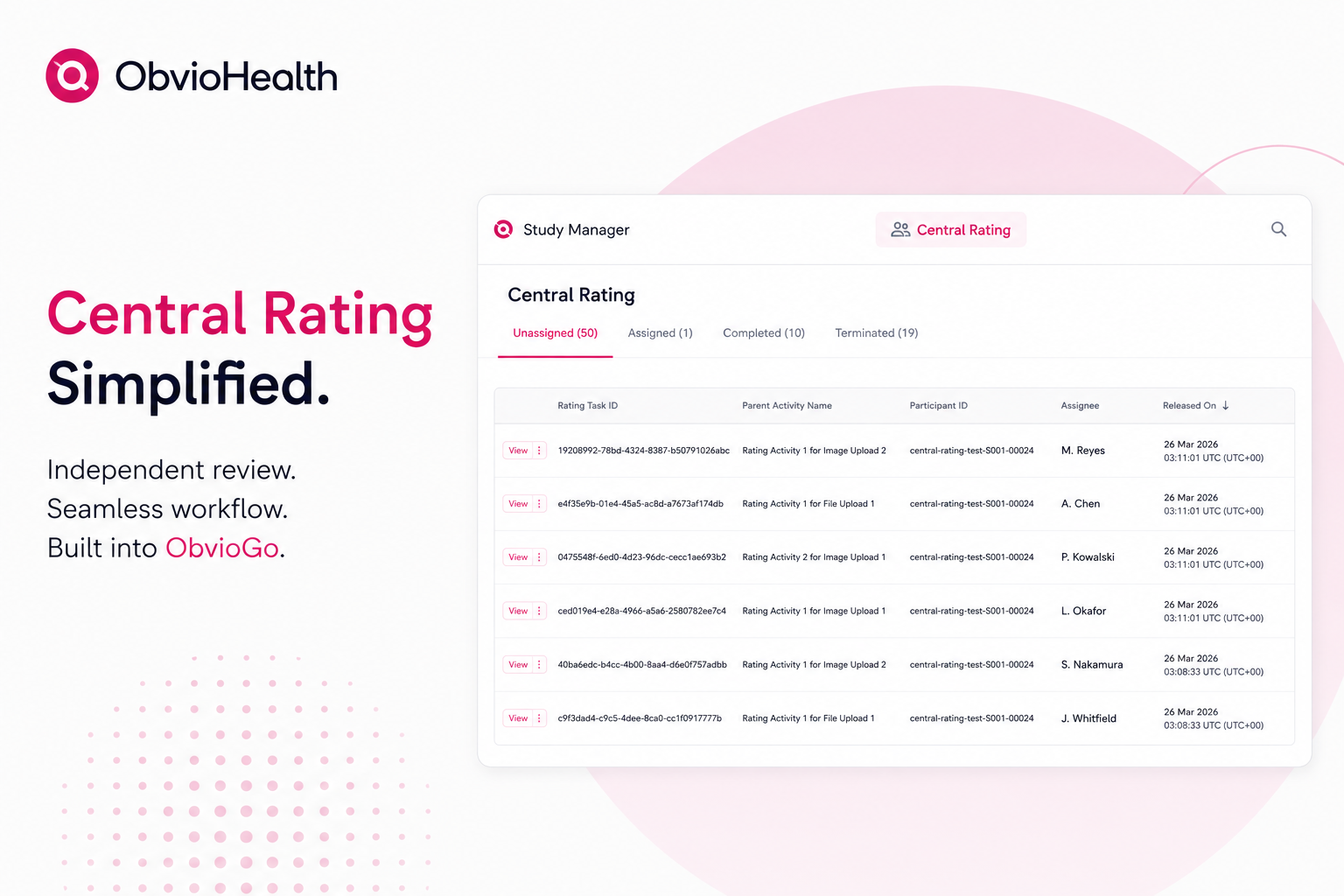
By combining ObvioHealth’s ObvioGo® digital platform with SPRIM PRO’s clinical research, patient support, remote clinical care, and operational expertise, the organizations provide a unified approach to designing and managing patient monitoring programs across clinical development, commercialization, and post-market support.

The model is designed to support areas including:

  • REMS programs and enhanced monitoring
  • Rare disease and pediatric oncology
  • Advanced biologics and cell and gene therapies
  • Specialty pharmaceuticals
  • Infusion therapies
  • Other high-touch treatment pathways

Rather than viewing technology, clinical support, patient engagement, and operations as separate components, the integrated approach connects them around the monitoring needs of the therapy and the patient.

What does the future of patient monitoring look like?

As therapies continue to evolve, patient monitoring will need to evolve with them.

The future is unlikely to be entirely site-based or entirely remote. Instead, it will require flexible models capable of connecting patients, caregivers, technology, clinical teams, and sponsors across the treatment journey.

For high-touch therapies, the question is shifting from:

“How do we collect patient data remotely?”

to:

“How do we turn patient signals into appropriate clinical action?”

Answering that question requires more than technology. It requires designing the monitoring experience around the patient and connecting each step from data capture through clinical support.

Learn more about the Integrated Digital Patient Monitoring & Clinical Support Solution from ObvioHealth and SPRIM PRO.

Blog

Beyond the Clinic: Rethinking Patient Monitoring for High-Touch Therapies

No items found.

Patient monitoring for high-touch therapies requires more than collecting data between clinic visits. It requires a connected approach that brings together remote data collection, digital technology, clinical oversight, patient and caregiver support, and clear escalation pathways so meaningful patient signals can lead to appropriate action.

As specialty medicines, advanced biologics, cell and gene therapies, and treatments requiring Risk Evaluation and Mitigation Strategy (REMS) programs become increasingly complex, monitoring may need to extend beyond traditional care settings and into patients’ everyday lives.

The challenge is no longer simply how to collect more data. It is how to create a connected monitoring experience that allows the right information to reach the right people at the right time—without creating unnecessary burden for patients, caregivers, providers, or sponsors.

Why do high-touch therapies require a different approach to patient monitoring?

Traditional models of patient monitoring were largely designed around defined interactions with healthcare professionals: a patient arrives at a site or care setting, an assessment is performed, information is documented, and an appropriate clinical action follows.

High-touch therapies can require a more continuous approach.

Patients may need to report symptoms between visits. Caregivers may provide observations or assist with assessments. Clinical teams may need visibility into remotely collected information. Sponsors may need to coordinate technology, clinical support, patient engagement, logistics, and escalation pathways across multiple vendors.

Each additional component can introduce another potential point of fragmentation.

For patients and caregivers, that can mean navigating different technologies, instructions, appointments, and points of contact. For clinical teams, it can mean determining which information requires attention and how it should be routed. For sponsors, it can mean managing multiple systems and service providers while trying to maintain a consistent monitoring experience.

The opportunity for remote patient monitoring isn’t simply to move existing activities out of the clinic. It is to rethink how these pieces work together.

How can remote patient data lead to clinical action?

Digital technology has made it possible to collect information from patients in ways that were difficult to achieve through site visits alone.

Electronic clinical outcome assessments (eCOA), digital symptom reporting, connected devices, telehealth, and other remote approaches can provide greater visibility into what is happening between traditional interactions.

But collecting information is only the first step.

A monitoring program also needs to consider what happens after a patient provides that information:

  • Who reviews the information?
  • What constitutes a meaningful signal?
  • Where does that signal go?
  • When is clinical follow-up required?
  • How does the patient or caregiver receive support?

For high-touch therapies, the value of a monitoring model increasingly depends on the connection between data collection and clinical action.

An integrated patient monitoring pathway can connect five critical steps:

  1. Capture: Collect patient or caregiver data remotely when appropriate.
  2. Monitor: Maintain visibility into incoming information according to program requirements.
  3. Identify: Recognize meaningful patient signals that may require attention.
  4. Route: Direct those signals through predefined clinical or operational pathways.
  5. Support: Provide appropriate clinical, patient, or caregiver follow-up.

Connecting these steps can help bridge the gap between collecting patient information and determining what happens next.

Why are caregivers important in pediatric and rare disease monitoring?

In many pediatric studies and treatment programs, the patient is not the only person participating in the monitoring process.

A parent or caregiver may help report symptoms, complete assessments, perform or support at-home measurements, facilitate study activities, or provide observations about changes occurring between clinical visits.

In these circumstances, the patient and caregiver function as a caregiver-child dyad—with both playing an important role in the data collection and treatment journey.

Designing monitoring around that relationship can provide a more realistic picture of how data are generated outside the clinic. It also raises important considerations:

  • Which information should come directly from the patient?
  • Which information requires caregiver observation or assistance?
  • How can measurements be performed consistently in the home?
  • How should caregivers be trained and supported?
  • How can monitoring support data quality without creating unnecessary burden for families?

Caregiver-supported data collection can be particularly relevant in rare disease and pediatric oncology, where patient populations may be small, longitudinal data can be especially valuable, and caregivers may play a significant role throughout the treatment journey.

The monitoring experience, therefore, needs to be designed not only around the patient, but around the people actively supporting that patient.

Does remote patient monitoring replace in-person clinical care?

No. Remote patient monitoring does not necessarily mean removing in-person care or clinical oversight.

For many high-touch therapies, a hybrid model may be more appropriate.

Certain activities remain within traditional care settings, while other appropriate monitoring activities can extend into the patient’s home. Digital technology can help connect those experiences, while clinical services provide the human layer needed to interpret information, support patients, and respond according to established pathways.

The goal isn’t to make every interaction remote. It is to determine what can appropriately happen remotely, what requires clinical involvement, and how those experiences can operate as one connected monitoring model.

That distinction becomes particularly important for therapies requiring enhanced clinical oversight.

What are the challenges of fragmented patient monitoring?

As patient monitoring becomes more complex, sponsors may need to think beyond individual technology features or isolated services.

A fragmented model can require sponsors to coordinate multiple components:

  • Digital platforms and remote data collection
  • Clinical monitoring and support
  • Patient and caregiver engagement
  • Telehealth interactions
  • Devices and logistics
  • Escalation and follow-up workflows

A digital platform can capture data, but technology alone does not provide clinical support.

Clinical teams can support patients, but they need access to the right information and workflows.

Logistics can put devices or materials into patients’ hands, but those tools need to fit into the broader monitoring experience.

Patient engagement can encourage participation, but engagement needs to connect to the activities that matter to the program.

The opportunity is to connect these components rather than manage them as isolated activities.

How are ObvioHealth and SPRIM PRO approaching integrated patient monitoring?

This is the thinking behind the Integrated Digital Patient Monitoring & Clinical Support Solution from ObvioHealth and SPRIM PRO.

By combining ObvioHealth’s ObvioGo® digital platform with SPRIM PRO’s clinical research, patient support, remote clinical care, and operational expertise, the organizations provide a unified approach to designing and managing patient monitoring programs across clinical development, commercialization, and post-market support.

The model is designed to support areas including:

  • REMS programs and enhanced monitoring
  • Rare disease and pediatric oncology
  • Advanced biologics and cell and gene therapies
  • Specialty pharmaceuticals
  • Infusion therapies
  • Other high-touch treatment pathways

Rather than viewing technology, clinical support, patient engagement, and operations as separate components, the integrated approach connects them around the monitoring needs of the therapy and the patient.

What does the future of patient monitoring look like?

As therapies continue to evolve, patient monitoring will need to evolve with them.

The future is unlikely to be entirely site-based or entirely remote. Instead, it will require flexible models capable of connecting patients, caregivers, technology, clinical teams, and sponsors across the treatment journey.

For high-touch therapies, the question is shifting from:

“How do we collect patient data remotely?”

to:

“How do we turn patient signals into appropriate clinical action?”

Answering that question requires more than technology. It requires designing the monitoring experience around the patient and connecting each step from data capture through clinical support.

Learn more about the Integrated Digital Patient Monitoring & Clinical Support Solution from ObvioHealth and SPRIM PRO.

Blog

Beyond the Clinic: Rethinking Patient Monitoring for High-Touch Therapies

Patient monitoring for high-touch therapies takes more than remote data collection. See how ObvioHealth and SPRIM PRO connect capture, clinical oversight, and support into one coordinated program.

No items found.

Patient monitoring for high-touch therapies requires more than collecting data between clinic visits. It requires a connected approach that brings together remote data collection, digital technology, clinical oversight, patient and caregiver support, and clear escalation pathways so meaningful patient signals can lead to appropriate action.

As specialty medicines, advanced biologics, cell and gene therapies, and treatments requiring Risk Evaluation and Mitigation Strategy (REMS) programs become increasingly complex, monitoring may need to extend beyond traditional care settings and into patients’ everyday lives.

The challenge is no longer simply how to collect more data. It is how to create a connected monitoring experience that allows the right information to reach the right people at the right time—without creating unnecessary burden for patients, caregivers, providers, or sponsors.

Why do high-touch therapies require a different approach to patient monitoring?

Traditional models of patient monitoring were largely designed around defined interactions with healthcare professionals: a patient arrives at a site or care setting, an assessment is performed, information is documented, and an appropriate clinical action follows.

High-touch therapies can require a more continuous approach.

Patients may need to report symptoms between visits. Caregivers may provide observations or assist with assessments. Clinical teams may need visibility into remotely collected information. Sponsors may need to coordinate technology, clinical support, patient engagement, logistics, and escalation pathways across multiple vendors.

Each additional component can introduce another potential point of fragmentation.

For patients and caregivers, that can mean navigating different technologies, instructions, appointments, and points of contact. For clinical teams, it can mean determining which information requires attention and how it should be routed. For sponsors, it can mean managing multiple systems and service providers while trying to maintain a consistent monitoring experience.

The opportunity for remote patient monitoring isn’t simply to move existing activities out of the clinic. It is to rethink how these pieces work together.

How can remote patient data lead to clinical action?

Digital technology has made it possible to collect information from patients in ways that were difficult to achieve through site visits alone.

Electronic clinical outcome assessments (eCOA), digital symptom reporting, connected devices, telehealth, and other remote approaches can provide greater visibility into what is happening between traditional interactions.

But collecting information is only the first step.

A monitoring program also needs to consider what happens after a patient provides that information:

  • Who reviews the information?
  • What constitutes a meaningful signal?
  • Where does that signal go?
  • When is clinical follow-up required?
  • How does the patient or caregiver receive support?

For high-touch therapies, the value of a monitoring model increasingly depends on the connection between data collection and clinical action.

An integrated patient monitoring pathway can connect five critical steps:

  1. Capture: Collect patient or caregiver data remotely when appropriate.
  2. Monitor: Maintain visibility into incoming information according to program requirements.
  3. Identify: Recognize meaningful patient signals that may require attention.
  4. Route: Direct those signals through predefined clinical or operational pathways.
  5. Support: Provide appropriate clinical, patient, or caregiver follow-up.

Connecting these steps can help bridge the gap between collecting patient information and determining what happens next.

Why are caregivers important in pediatric and rare disease monitoring?

In many pediatric studies and treatment programs, the patient is not the only person participating in the monitoring process.

A parent or caregiver may help report symptoms, complete assessments, perform or support at-home measurements, facilitate study activities, or provide observations about changes occurring between clinical visits.

In these circumstances, the patient and caregiver function as a caregiver-child dyad—with both playing an important role in the data collection and treatment journey.

Designing monitoring around that relationship can provide a more realistic picture of how data are generated outside the clinic. It also raises important considerations:

  • Which information should come directly from the patient?
  • Which information requires caregiver observation or assistance?
  • How can measurements be performed consistently in the home?
  • How should caregivers be trained and supported?
  • How can monitoring support data quality without creating unnecessary burden for families?

Caregiver-supported data collection can be particularly relevant in rare disease and pediatric oncology, where patient populations may be small, longitudinal data can be especially valuable, and caregivers may play a significant role throughout the treatment journey.

The monitoring experience, therefore, needs to be designed not only around the patient, but around the people actively supporting that patient.

Does remote patient monitoring replace in-person clinical care?

No. Remote patient monitoring does not necessarily mean removing in-person care or clinical oversight.

For many high-touch therapies, a hybrid model may be more appropriate.

Certain activities remain within traditional care settings, while other appropriate monitoring activities can extend into the patient’s home. Digital technology can help connect those experiences, while clinical services provide the human layer needed to interpret information, support patients, and respond according to established pathways.

The goal isn’t to make every interaction remote. It is to determine what can appropriately happen remotely, what requires clinical involvement, and how those experiences can operate as one connected monitoring model.

That distinction becomes particularly important for therapies requiring enhanced clinical oversight.

What are the challenges of fragmented patient monitoring?

As patient monitoring becomes more complex, sponsors may need to think beyond individual technology features or isolated services.

A fragmented model can require sponsors to coordinate multiple components:

  • Digital platforms and remote data collection
  • Clinical monitoring and support
  • Patient and caregiver engagement
  • Telehealth interactions
  • Devices and logistics
  • Escalation and follow-up workflows

A digital platform can capture data, but technology alone does not provide clinical support.

Clinical teams can support patients, but they need access to the right information and workflows.

Logistics can put devices or materials into patients’ hands, but those tools need to fit into the broader monitoring experience.

Patient engagement can encourage participation, but engagement needs to connect to the activities that matter to the program.

The opportunity is to connect these components rather than manage them as isolated activities.

How are ObvioHealth and SPRIM PRO approaching integrated patient monitoring?

This is the thinking behind the Integrated Digital Patient Monitoring & Clinical Support Solution from ObvioHealth and SPRIM PRO.

By combining ObvioHealth’s ObvioGo® digital platform with SPRIM PRO’s clinical research, patient support, remote clinical care, and operational expertise, the organizations provide a unified approach to designing and managing patient monitoring programs across clinical development, commercialization, and post-market support.

The model is designed to support areas including:

  • REMS programs and enhanced monitoring
  • Rare disease and pediatric oncology
  • Advanced biologics and cell and gene therapies
  • Specialty pharmaceuticals
  • Infusion therapies
  • Other high-touch treatment pathways

Rather than viewing technology, clinical support, patient engagement, and operations as separate components, the integrated approach connects them around the monitoring needs of the therapy and the patient.

What does the future of patient monitoring look like?

As therapies continue to evolve, patient monitoring will need to evolve with them.

The future is unlikely to be entirely site-based or entirely remote. Instead, it will require flexible models capable of connecting patients, caregivers, technology, clinical teams, and sponsors across the treatment journey.

For high-touch therapies, the question is shifting from:

“How do we collect patient data remotely?”

to:

“How do we turn patient signals into appropriate clinical action?”

Answering that question requires more than technology. It requires designing the monitoring experience around the patient and connecting each step from data capture through clinical support.

Learn more about the Integrated Digital Patient Monitoring & Clinical Support Solution from ObvioHealth and SPRIM PRO.

Blog

Beyond the Clinic: Rethinking Patient Monitoring for High-Touch Therapies

No items found.

Patient monitoring for high-touch therapies requires more than collecting data between clinic visits. It requires a connected approach that brings together remote data collection, digital technology, clinical oversight, patient and caregiver support, and clear escalation pathways so meaningful patient signals can lead to appropriate action.

As specialty medicines, advanced biologics, cell and gene therapies, and treatments requiring Risk Evaluation and Mitigation Strategy (REMS) programs become increasingly complex, monitoring may need to extend beyond traditional care settings and into patients’ everyday lives.

The challenge is no longer simply how to collect more data. It is how to create a connected monitoring experience that allows the right information to reach the right people at the right time—without creating unnecessary burden for patients, caregivers, providers, or sponsors.

Why do high-touch therapies require a different approach to patient monitoring?

Traditional models of patient monitoring were largely designed around defined interactions with healthcare professionals: a patient arrives at a site or care setting, an assessment is performed, information is documented, and an appropriate clinical action follows.

High-touch therapies can require a more continuous approach.

Patients may need to report symptoms between visits. Caregivers may provide observations or assist with assessments. Clinical teams may need visibility into remotely collected information. Sponsors may need to coordinate technology, clinical support, patient engagement, logistics, and escalation pathways across multiple vendors.

Each additional component can introduce another potential point of fragmentation.

For patients and caregivers, that can mean navigating different technologies, instructions, appointments, and points of contact. For clinical teams, it can mean determining which information requires attention and how it should be routed. For sponsors, it can mean managing multiple systems and service providers while trying to maintain a consistent monitoring experience.

The opportunity for remote patient monitoring isn’t simply to move existing activities out of the clinic. It is to rethink how these pieces work together.

How can remote patient data lead to clinical action?

Digital technology has made it possible to collect information from patients in ways that were difficult to achieve through site visits alone.

Electronic clinical outcome assessments (eCOA), digital symptom reporting, connected devices, telehealth, and other remote approaches can provide greater visibility into what is happening between traditional interactions.

But collecting information is only the first step.

A monitoring program also needs to consider what happens after a patient provides that information:

  • Who reviews the information?
  • What constitutes a meaningful signal?
  • Where does that signal go?
  • When is clinical follow-up required?
  • How does the patient or caregiver receive support?

For high-touch therapies, the value of a monitoring model increasingly depends on the connection between data collection and clinical action.

An integrated patient monitoring pathway can connect five critical steps:

  1. Capture: Collect patient or caregiver data remotely when appropriate.
  2. Monitor: Maintain visibility into incoming information according to program requirements.
  3. Identify: Recognize meaningful patient signals that may require attention.
  4. Route: Direct those signals through predefined clinical or operational pathways.
  5. Support: Provide appropriate clinical, patient, or caregiver follow-up.

Connecting these steps can help bridge the gap between collecting patient information and determining what happens next.

Why are caregivers important in pediatric and rare disease monitoring?

In many pediatric studies and treatment programs, the patient is not the only person participating in the monitoring process.

A parent or caregiver may help report symptoms, complete assessments, perform or support at-home measurements, facilitate study activities, or provide observations about changes occurring between clinical visits.

In these circumstances, the patient and caregiver function as a caregiver-child dyad—with both playing an important role in the data collection and treatment journey.

Designing monitoring around that relationship can provide a more realistic picture of how data are generated outside the clinic. It also raises important considerations:

  • Which information should come directly from the patient?
  • Which information requires caregiver observation or assistance?
  • How can measurements be performed consistently in the home?
  • How should caregivers be trained and supported?
  • How can monitoring support data quality without creating unnecessary burden for families?

Caregiver-supported data collection can be particularly relevant in rare disease and pediatric oncology, where patient populations may be small, longitudinal data can be especially valuable, and caregivers may play a significant role throughout the treatment journey.

The monitoring experience, therefore, needs to be designed not only around the patient, but around the people actively supporting that patient.

Does remote patient monitoring replace in-person clinical care?

No. Remote patient monitoring does not necessarily mean removing in-person care or clinical oversight.

For many high-touch therapies, a hybrid model may be more appropriate.

Certain activities remain within traditional care settings, while other appropriate monitoring activities can extend into the patient’s home. Digital technology can help connect those experiences, while clinical services provide the human layer needed to interpret information, support patients, and respond according to established pathways.

The goal isn’t to make every interaction remote. It is to determine what can appropriately happen remotely, what requires clinical involvement, and how those experiences can operate as one connected monitoring model.

That distinction becomes particularly important for therapies requiring enhanced clinical oversight.

What are the challenges of fragmented patient monitoring?

As patient monitoring becomes more complex, sponsors may need to think beyond individual technology features or isolated services.

A fragmented model can require sponsors to coordinate multiple components:

  • Digital platforms and remote data collection
  • Clinical monitoring and support
  • Patient and caregiver engagement
  • Telehealth interactions
  • Devices and logistics
  • Escalation and follow-up workflows

A digital platform can capture data, but technology alone does not provide clinical support.

Clinical teams can support patients, but they need access to the right information and workflows.

Logistics can put devices or materials into patients’ hands, but those tools need to fit into the broader monitoring experience.

Patient engagement can encourage participation, but engagement needs to connect to the activities that matter to the program.

The opportunity is to connect these components rather than manage them as isolated activities.

How are ObvioHealth and SPRIM PRO approaching integrated patient monitoring?

This is the thinking behind the Integrated Digital Patient Monitoring & Clinical Support Solution from ObvioHealth and SPRIM PRO.

By combining ObvioHealth’s ObvioGo® digital platform with SPRIM PRO’s clinical research, patient support, remote clinical care, and operational expertise, the organizations provide a unified approach to designing and managing patient monitoring programs across clinical development, commercialization, and post-market support.

The model is designed to support areas including:

  • REMS programs and enhanced monitoring
  • Rare disease and pediatric oncology
  • Advanced biologics and cell and gene therapies
  • Specialty pharmaceuticals
  • Infusion therapies
  • Other high-touch treatment pathways

Rather than viewing technology, clinical support, patient engagement, and operations as separate components, the integrated approach connects them around the monitoring needs of the therapy and the patient.

What does the future of patient monitoring look like?

As therapies continue to evolve, patient monitoring will need to evolve with them.

The future is unlikely to be entirely site-based or entirely remote. Instead, it will require flexible models capable of connecting patients, caregivers, technology, clinical teams, and sponsors across the treatment journey.

For high-touch therapies, the question is shifting from:

“How do we collect patient data remotely?”

to:

“How do we turn patient signals into appropriate clinical action?”

Answering that question requires more than technology. It requires designing the monitoring experience around the patient and connecting each step from data capture through clinical support.

Learn more about the Integrated Digital Patient Monitoring & Clinical Support Solution from ObvioHealth and SPRIM PRO.

Blog

Beyond the Clinic: Rethinking Patient Monitoring for High-Touch Therapies

No items found.

Patient monitoring for high-touch therapies requires more than collecting data between clinic visits. It requires a connected approach that brings together remote data collection, digital technology, clinical oversight, patient and caregiver support, and clear escalation pathways so meaningful patient signals can lead to appropriate action.

As specialty medicines, advanced biologics, cell and gene therapies, and treatments requiring Risk Evaluation and Mitigation Strategy (REMS) programs become increasingly complex, monitoring may need to extend beyond traditional care settings and into patients’ everyday lives.

The challenge is no longer simply how to collect more data. It is how to create a connected monitoring experience that allows the right information to reach the right people at the right time—without creating unnecessary burden for patients, caregivers, providers, or sponsors.

Why do high-touch therapies require a different approach to patient monitoring?

Traditional models of patient monitoring were largely designed around defined interactions with healthcare professionals: a patient arrives at a site or care setting, an assessment is performed, information is documented, and an appropriate clinical action follows.

High-touch therapies can require a more continuous approach.

Patients may need to report symptoms between visits. Caregivers may provide observations or assist with assessments. Clinical teams may need visibility into remotely collected information. Sponsors may need to coordinate technology, clinical support, patient engagement, logistics, and escalation pathways across multiple vendors.

Each additional component can introduce another potential point of fragmentation.

For patients and caregivers, that can mean navigating different technologies, instructions, appointments, and points of contact. For clinical teams, it can mean determining which information requires attention and how it should be routed. For sponsors, it can mean managing multiple systems and service providers while trying to maintain a consistent monitoring experience.

The opportunity for remote patient monitoring isn’t simply to move existing activities out of the clinic. It is to rethink how these pieces work together.

How can remote patient data lead to clinical action?

Digital technology has made it possible to collect information from patients in ways that were difficult to achieve through site visits alone.

Electronic clinical outcome assessments (eCOA), digital symptom reporting, connected devices, telehealth, and other remote approaches can provide greater visibility into what is happening between traditional interactions.

But collecting information is only the first step.

A monitoring program also needs to consider what happens after a patient provides that information:

  • Who reviews the information?
  • What constitutes a meaningful signal?
  • Where does that signal go?
  • When is clinical follow-up required?
  • How does the patient or caregiver receive support?

For high-touch therapies, the value of a monitoring model increasingly depends on the connection between data collection and clinical action.

An integrated patient monitoring pathway can connect five critical steps:

  1. Capture: Collect patient or caregiver data remotely when appropriate.
  2. Monitor: Maintain visibility into incoming information according to program requirements.
  3. Identify: Recognize meaningful patient signals that may require attention.
  4. Route: Direct those signals through predefined clinical or operational pathways.
  5. Support: Provide appropriate clinical, patient, or caregiver follow-up.

Connecting these steps can help bridge the gap between collecting patient information and determining what happens next.

Why are caregivers important in pediatric and rare disease monitoring?

In many pediatric studies and treatment programs, the patient is not the only person participating in the monitoring process.

A parent or caregiver may help report symptoms, complete assessments, perform or support at-home measurements, facilitate study activities, or provide observations about changes occurring between clinical visits.

In these circumstances, the patient and caregiver function as a caregiver-child dyad—with both playing an important role in the data collection and treatment journey.

Designing monitoring around that relationship can provide a more realistic picture of how data are generated outside the clinic. It also raises important considerations:

  • Which information should come directly from the patient?
  • Which information requires caregiver observation or assistance?
  • How can measurements be performed consistently in the home?
  • How should caregivers be trained and supported?
  • How can monitoring support data quality without creating unnecessary burden for families?

Caregiver-supported data collection can be particularly relevant in rare disease and pediatric oncology, where patient populations may be small, longitudinal data can be especially valuable, and caregivers may play a significant role throughout the treatment journey.

The monitoring experience, therefore, needs to be designed not only around the patient, but around the people actively supporting that patient.

Does remote patient monitoring replace in-person clinical care?

No. Remote patient monitoring does not necessarily mean removing in-person care or clinical oversight.

For many high-touch therapies, a hybrid model may be more appropriate.

Certain activities remain within traditional care settings, while other appropriate monitoring activities can extend into the patient’s home. Digital technology can help connect those experiences, while clinical services provide the human layer needed to interpret information, support patients, and respond according to established pathways.

The goal isn’t to make every interaction remote. It is to determine what can appropriately happen remotely, what requires clinical involvement, and how those experiences can operate as one connected monitoring model.

That distinction becomes particularly important for therapies requiring enhanced clinical oversight.

What are the challenges of fragmented patient monitoring?

As patient monitoring becomes more complex, sponsors may need to think beyond individual technology features or isolated services.

A fragmented model can require sponsors to coordinate multiple components:

  • Digital platforms and remote data collection
  • Clinical monitoring and support
  • Patient and caregiver engagement
  • Telehealth interactions
  • Devices and logistics
  • Escalation and follow-up workflows

A digital platform can capture data, but technology alone does not provide clinical support.

Clinical teams can support patients, but they need access to the right information and workflows.

Logistics can put devices or materials into patients’ hands, but those tools need to fit into the broader monitoring experience.

Patient engagement can encourage participation, but engagement needs to connect to the activities that matter to the program.

The opportunity is to connect these components rather than manage them as isolated activities.

How are ObvioHealth and SPRIM PRO approaching integrated patient monitoring?

This is the thinking behind the Integrated Digital Patient Monitoring & Clinical Support Solution from ObvioHealth and SPRIM PRO.

By combining ObvioHealth’s ObvioGo® digital platform with SPRIM PRO’s clinical research, patient support, remote clinical care, and operational expertise, the organizations provide a unified approach to designing and managing patient monitoring programs across clinical development, commercialization, and post-market support.

The model is designed to support areas including:

  • REMS programs and enhanced monitoring
  • Rare disease and pediatric oncology
  • Advanced biologics and cell and gene therapies
  • Specialty pharmaceuticals
  • Infusion therapies
  • Other high-touch treatment pathways

Rather than viewing technology, clinical support, patient engagement, and operations as separate components, the integrated approach connects them around the monitoring needs of the therapy and the patient.

What does the future of patient monitoring look like?

As therapies continue to evolve, patient monitoring will need to evolve with them.

The future is unlikely to be entirely site-based or entirely remote. Instead, it will require flexible models capable of connecting patients, caregivers, technology, clinical teams, and sponsors across the treatment journey.

For high-touch therapies, the question is shifting from:

“How do we collect patient data remotely?”

to:

“How do we turn patient signals into appropriate clinical action?”

Answering that question requires more than technology. It requires designing the monitoring experience around the patient and connecting each step from data capture through clinical support.

Learn more about the Integrated Digital Patient Monitoring & Clinical Support Solution from ObvioHealth and SPRIM PRO.

Blog

Beyond the Clinic: Rethinking Patient Monitoring for High-Touch Therapies

Patient monitoring for high-touch therapies takes more than remote data collection. See how ObvioHealth and SPRIM PRO connect capture, clinical oversight, and support into one coordinated program.

No items found.

Patient monitoring for high-touch therapies requires more than collecting data between clinic visits. It requires a connected approach that brings together remote data collection, digital technology, clinical oversight, patient and caregiver support, and clear escalation pathways so meaningful patient signals can lead to appropriate action.

As specialty medicines, advanced biologics, cell and gene therapies, and treatments requiring Risk Evaluation and Mitigation Strategy (REMS) programs become increasingly complex, monitoring may need to extend beyond traditional care settings and into patients’ everyday lives.

The challenge is no longer simply how to collect more data. It is how to create a connected monitoring experience that allows the right information to reach the right people at the right time—without creating unnecessary burden for patients, caregivers, providers, or sponsors.

Why do high-touch therapies require a different approach to patient monitoring?

Traditional models of patient monitoring were largely designed around defined interactions with healthcare professionals: a patient arrives at a site or care setting, an assessment is performed, information is documented, and an appropriate clinical action follows.

High-touch therapies can require a more continuous approach.

Patients may need to report symptoms between visits. Caregivers may provide observations or assist with assessments. Clinical teams may need visibility into remotely collected information. Sponsors may need to coordinate technology, clinical support, patient engagement, logistics, and escalation pathways across multiple vendors.

Each additional component can introduce another potential point of fragmentation.

For patients and caregivers, that can mean navigating different technologies, instructions, appointments, and points of contact. For clinical teams, it can mean determining which information requires attention and how it should be routed. For sponsors, it can mean managing multiple systems and service providers while trying to maintain a consistent monitoring experience.

The opportunity for remote patient monitoring isn’t simply to move existing activities out of the clinic. It is to rethink how these pieces work together.

How can remote patient data lead to clinical action?

Digital technology has made it possible to collect information from patients in ways that were difficult to achieve through site visits alone.

Electronic clinical outcome assessments (eCOA), digital symptom reporting, connected devices, telehealth, and other remote approaches can provide greater visibility into what is happening between traditional interactions.

But collecting information is only the first step.

A monitoring program also needs to consider what happens after a patient provides that information:

  • Who reviews the information?
  • What constitutes a meaningful signal?
  • Where does that signal go?
  • When is clinical follow-up required?
  • How does the patient or caregiver receive support?

For high-touch therapies, the value of a monitoring model increasingly depends on the connection between data collection and clinical action.

An integrated patient monitoring pathway can connect five critical steps:

  1. Capture: Collect patient or caregiver data remotely when appropriate.
  2. Monitor: Maintain visibility into incoming information according to program requirements.
  3. Identify: Recognize meaningful patient signals that may require attention.
  4. Route: Direct those signals through predefined clinical or operational pathways.
  5. Support: Provide appropriate clinical, patient, or caregiver follow-up.

Connecting these steps can help bridge the gap between collecting patient information and determining what happens next.

Why are caregivers important in pediatric and rare disease monitoring?

In many pediatric studies and treatment programs, the patient is not the only person participating in the monitoring process.

A parent or caregiver may help report symptoms, complete assessments, perform or support at-home measurements, facilitate study activities, or provide observations about changes occurring between clinical visits.

In these circumstances, the patient and caregiver function as a caregiver-child dyad—with both playing an important role in the data collection and treatment journey.

Designing monitoring around that relationship can provide a more realistic picture of how data are generated outside the clinic. It also raises important considerations:

  • Which information should come directly from the patient?
  • Which information requires caregiver observation or assistance?
  • How can measurements be performed consistently in the home?
  • How should caregivers be trained and supported?
  • How can monitoring support data quality without creating unnecessary burden for families?

Caregiver-supported data collection can be particularly relevant in rare disease and pediatric oncology, where patient populations may be small, longitudinal data can be especially valuable, and caregivers may play a significant role throughout the treatment journey.

The monitoring experience, therefore, needs to be designed not only around the patient, but around the people actively supporting that patient.

Does remote patient monitoring replace in-person clinical care?

No. Remote patient monitoring does not necessarily mean removing in-person care or clinical oversight.

For many high-touch therapies, a hybrid model may be more appropriate.

Certain activities remain within traditional care settings, while other appropriate monitoring activities can extend into the patient’s home. Digital technology can help connect those experiences, while clinical services provide the human layer needed to interpret information, support patients, and respond according to established pathways.

The goal isn’t to make every interaction remote. It is to determine what can appropriately happen remotely, what requires clinical involvement, and how those experiences can operate as one connected monitoring model.

That distinction becomes particularly important for therapies requiring enhanced clinical oversight.

What are the challenges of fragmented patient monitoring?

As patient monitoring becomes more complex, sponsors may need to think beyond individual technology features or isolated services.

A fragmented model can require sponsors to coordinate multiple components:

  • Digital platforms and remote data collection
  • Clinical monitoring and support
  • Patient and caregiver engagement
  • Telehealth interactions
  • Devices and logistics
  • Escalation and follow-up workflows

A digital platform can capture data, but technology alone does not provide clinical support.

Clinical teams can support patients, but they need access to the right information and workflows.

Logistics can put devices or materials into patients’ hands, but those tools need to fit into the broader monitoring experience.

Patient engagement can encourage participation, but engagement needs to connect to the activities that matter to the program.

The opportunity is to connect these components rather than manage them as isolated activities.

How are ObvioHealth and SPRIM PRO approaching integrated patient monitoring?

This is the thinking behind the Integrated Digital Patient Monitoring & Clinical Support Solution from ObvioHealth and SPRIM PRO.

By combining ObvioHealth’s ObvioGo® digital platform with SPRIM PRO’s clinical research, patient support, remote clinical care, and operational expertise, the organizations provide a unified approach to designing and managing patient monitoring programs across clinical development, commercialization, and post-market support.

The model is designed to support areas including:

  • REMS programs and enhanced monitoring
  • Rare disease and pediatric oncology
  • Advanced biologics and cell and gene therapies
  • Specialty pharmaceuticals
  • Infusion therapies
  • Other high-touch treatment pathways

Rather than viewing technology, clinical support, patient engagement, and operations as separate components, the integrated approach connects them around the monitoring needs of the therapy and the patient.

What does the future of patient monitoring look like?

As therapies continue to evolve, patient monitoring will need to evolve with them.

The future is unlikely to be entirely site-based or entirely remote. Instead, it will require flexible models capable of connecting patients, caregivers, technology, clinical teams, and sponsors across the treatment journey.

For high-touch therapies, the question is shifting from:

“How do we collect patient data remotely?”

to:

“How do we turn patient signals into appropriate clinical action?”

Answering that question requires more than technology. It requires designing the monitoring experience around the patient and connecting each step from data capture through clinical support.

Learn more about the Integrated Digital Patient Monitoring & Clinical Support Solution from ObvioHealth and SPRIM PRO.

Blog

Beyond the Clinic: Rethinking Patient Monitoring for High-Touch Therapies

Patient monitoring for high-touch therapies takes more than remote data collection. See how ObvioHealth and SPRIM PRO connect capture, clinical oversight, and support into one coordinated program.

Patient monitoring for high-touch therapies requires more than collecting data between clinic visits. It requires a connected approach that brings together remote data collection, digital technology, clinical oversight, patient and caregiver support, and clear escalation pathways so meaningful patient signals can lead to appropriate action.

As specialty medicines, advanced biologics, cell and gene therapies, and treatments requiring Risk Evaluation and Mitigation Strategy (REMS) programs become increasingly complex, monitoring may need to extend beyond traditional care settings and into patients’ everyday lives.

The challenge is no longer simply how to collect more data. It is how to create a connected monitoring experience that allows the right information to reach the right people at the right time—without creating unnecessary burden for patients, caregivers, providers, or sponsors.

Why do high-touch therapies require a different approach to patient monitoring?

Traditional models of patient monitoring were largely designed around defined interactions with healthcare professionals: a patient arrives at a site or care setting, an assessment is performed, information is documented, and an appropriate clinical action follows.

High-touch therapies can require a more continuous approach.

Patients may need to report symptoms between visits. Caregivers may provide observations or assist with assessments. Clinical teams may need visibility into remotely collected information. Sponsors may need to coordinate technology, clinical support, patient engagement, logistics, and escalation pathways across multiple vendors.

Each additional component can introduce another potential point of fragmentation.

For patients and caregivers, that can mean navigating different technologies, instructions, appointments, and points of contact. For clinical teams, it can mean determining which information requires attention and how it should be routed. For sponsors, it can mean managing multiple systems and service providers while trying to maintain a consistent monitoring experience.

The opportunity for remote patient monitoring isn’t simply to move existing activities out of the clinic. It is to rethink how these pieces work together.

How can remote patient data lead to clinical action?

Digital technology has made it possible to collect information from patients in ways that were difficult to achieve through site visits alone.

Electronic clinical outcome assessments (eCOA), digital symptom reporting, connected devices, telehealth, and other remote approaches can provide greater visibility into what is happening between traditional interactions.

But collecting information is only the first step.

A monitoring program also needs to consider what happens after a patient provides that information:

  • Who reviews the information?
  • What constitutes a meaningful signal?
  • Where does that signal go?
  • When is clinical follow-up required?
  • How does the patient or caregiver receive support?

For high-touch therapies, the value of a monitoring model increasingly depends on the connection between data collection and clinical action.

An integrated patient monitoring pathway can connect five critical steps:

  1. Capture: Collect patient or caregiver data remotely when appropriate.
  2. Monitor: Maintain visibility into incoming information according to program requirements.
  3. Identify: Recognize meaningful patient signals that may require attention.
  4. Route: Direct those signals through predefined clinical or operational pathways.
  5. Support: Provide appropriate clinical, patient, or caregiver follow-up.

Connecting these steps can help bridge the gap between collecting patient information and determining what happens next.

Why are caregivers important in pediatric and rare disease monitoring?

In many pediatric studies and treatment programs, the patient is not the only person participating in the monitoring process.

A parent or caregiver may help report symptoms, complete assessments, perform or support at-home measurements, facilitate study activities, or provide observations about changes occurring between clinical visits.

In these circumstances, the patient and caregiver function as a caregiver-child dyad—with both playing an important role in the data collection and treatment journey.

Designing monitoring around that relationship can provide a more realistic picture of how data are generated outside the clinic. It also raises important considerations:

  • Which information should come directly from the patient?
  • Which information requires caregiver observation or assistance?
  • How can measurements be performed consistently in the home?
  • How should caregivers be trained and supported?
  • How can monitoring support data quality without creating unnecessary burden for families?

Caregiver-supported data collection can be particularly relevant in rare disease and pediatric oncology, where patient populations may be small, longitudinal data can be especially valuable, and caregivers may play a significant role throughout the treatment journey.

The monitoring experience, therefore, needs to be designed not only around the patient, but around the people actively supporting that patient.

Does remote patient monitoring replace in-person clinical care?

No. Remote patient monitoring does not necessarily mean removing in-person care or clinical oversight.

For many high-touch therapies, a hybrid model may be more appropriate.

Certain activities remain within traditional care settings, while other appropriate monitoring activities can extend into the patient’s home. Digital technology can help connect those experiences, while clinical services provide the human layer needed to interpret information, support patients, and respond according to established pathways.

The goal isn’t to make every interaction remote. It is to determine what can appropriately happen remotely, what requires clinical involvement, and how those experiences can operate as one connected monitoring model.

That distinction becomes particularly important for therapies requiring enhanced clinical oversight.

What are the challenges of fragmented patient monitoring?

As patient monitoring becomes more complex, sponsors may need to think beyond individual technology features or isolated services.

A fragmented model can require sponsors to coordinate multiple components:

  • Digital platforms and remote data collection
  • Clinical monitoring and support
  • Patient and caregiver engagement
  • Telehealth interactions
  • Devices and logistics
  • Escalation and follow-up workflows

A digital platform can capture data, but technology alone does not provide clinical support.

Clinical teams can support patients, but they need access to the right information and workflows.

Logistics can put devices or materials into patients’ hands, but those tools need to fit into the broader monitoring experience.

Patient engagement can encourage participation, but engagement needs to connect to the activities that matter to the program.

The opportunity is to connect these components rather than manage them as isolated activities.

How are ObvioHealth and SPRIM PRO approaching integrated patient monitoring?

This is the thinking behind the Integrated Digital Patient Monitoring & Clinical Support Solution from ObvioHealth and SPRIM PRO.

By combining ObvioHealth’s ObvioGo® digital platform with SPRIM PRO’s clinical research, patient support, remote clinical care, and operational expertise, the organizations provide a unified approach to designing and managing patient monitoring programs across clinical development, commercialization, and post-market support.

The model is designed to support areas including:

  • REMS programs and enhanced monitoring
  • Rare disease and pediatric oncology
  • Advanced biologics and cell and gene therapies
  • Specialty pharmaceuticals
  • Infusion therapies
  • Other high-touch treatment pathways

Rather than viewing technology, clinical support, patient engagement, and operations as separate components, the integrated approach connects them around the monitoring needs of the therapy and the patient.

What does the future of patient monitoring look like?

As therapies continue to evolve, patient monitoring will need to evolve with them.

The future is unlikely to be entirely site-based or entirely remote. Instead, it will require flexible models capable of connecting patients, caregivers, technology, clinical teams, and sponsors across the treatment journey.

For high-touch therapies, the question is shifting from:

“How do we collect patient data remotely?”

to:

“How do we turn patient signals into appropriate clinical action?”

Answering that question requires more than technology. It requires designing the monitoring experience around the patient and connecting each step from data capture through clinical support.

Learn more about the Integrated Digital Patient Monitoring & Clinical Support Solution from ObvioHealth and SPRIM PRO.